

Who is classed as an unpaid carer?
An unpaid carer, also known as an informal carer, is an individual who provides regular and ongoing care and support to a friend or family member who has an illness, disability, mental health condition or who is elderly and frail.
The carer may assist with day-to-day activities such as bathing, dressing, feeding, and administering medication, as well as providing emotional support and companionship. This type of care is unpaid, meaning that the carer is not employed by an agency or organization to provide care services. Instead, they take on the responsibility of caring for their loved one out of a sense of duty, love, and compassion.
Unpaid carers play a vital role in our society by providing essential care and support to those who need it the most, often without recognition or compensation
Registering with your GP
If you look after someone, letting your GP know you're a carer can make a big difference. By registering, you’ll be added to the carers’ register, which helps your GP understand your responsibilities and offer the right support. This might include help managing prescriptions and access to the vaccinations you are entitled to. It’s a simple step that ensures your health and wellbeing are looked after too.
You can tell your GP in person or over the phone, or you can download the registering with your GP template
💙 Find out what support is available to you in Lincolnshire:🔗 Carers | Connect to Support Lincolnshire
#CarersSupport #LincolnshireCarersService #YouAreNotAlone
Unpaid carers are vital in supporting loved ones with health issues, but their role can be challenging and isolating. It's essential for them to know support is available.
Key resources include:
- Local carers' centres offering advice, emotional support, training, and social activities, along with support groups for connection.
- Local authorities providing respite care, financial assistance, and access to services.
- National organisations like Carers UK and Carers Trust that offer helplines and online forums for guidance.
Carers should recognise they are not alone and can access various forms of help throughout their caregiving journey.
Please visit Online, Phone & In Person Support for Unpaid Carers - Lincolnshire | Carers First for further support.
Unpaid carers face several barriers, including:
- Lack of recognition: Many feel invisible and undervalued, leading to isolation and stress.
- Financial strain: Carers often reduce work hours or quit jobs, causing income loss and instability.
- Limited access to resources: Finding support like respite care, training, and emotional help is challenging, leading to potential burnout.
Addressing these challenges is crucial to providing the necessary support for carers to thrive.
There is a wealth of information on the NHS Website about carers and caring.
Below are some links into the site that we hope you will find useful.
- A guide to care and support. Information for carers and people who have care & support needs.
- Caring for someone. Advice on providing care, medicines etc.
- Care after hospital. Providing care for people who have been recently discharged from hospital.
- Taking a break. Caring for someone can be a full-time job - find out about accessing breaks and respite care.
- Support and benefits for carers. Caring for someone can be a full-time job - find out about accessing breaks and respite care.
-
Work and Disability. Guidance, support and help with employment issues.
-
Being a Young carer. Advice for carers 18 or under and their entitlement to support
Help claiming benefits, looking after your bank balance and understanding the legal issues of caring.
- Benefits for carers, Directing carers to the benefits that can help them in their caring role
- Benefits for the under-65s. Advice and information on helping the person you look after get the benefits that they are entitled to.
Benefits for the over-65s. Advice and information on financial support for older people with a disability or illness. - Carer's Assement. How your benefits maybe affected after the death of the person you look after and what happens to their benefits
- Other benefits. Advice for carers and the people they are looking after on claiming a whole host of other benefits unrelated to their disability or caring
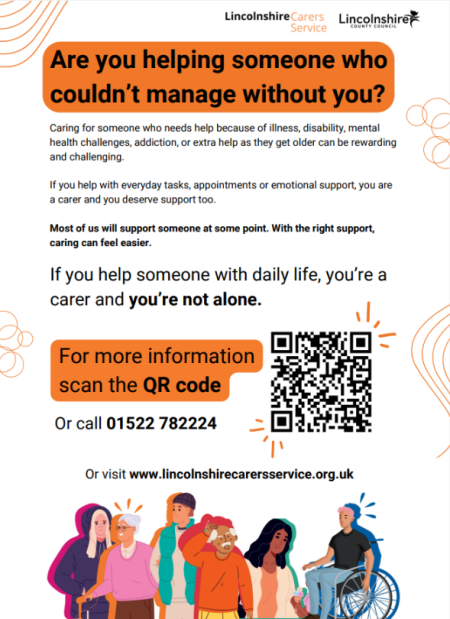
Are you helping someone who couldn’t manage without you?
Caring for someone who needs help because of illness, disability, mental health challenges, addiction, or extra help as they get older can be rewarding and challenging.
If you help with everyday tasks, appointments or emotional support, you are a carer and you deserve support too. Most of us will support someone at some point.
With the right support, caring can feel easier.
If you help someone with daily life, you’re a carer and you’re not alone.
For more information call 01522 782224
Or visit Lincolnshire Carers Service | Lincolnshire Carers Services